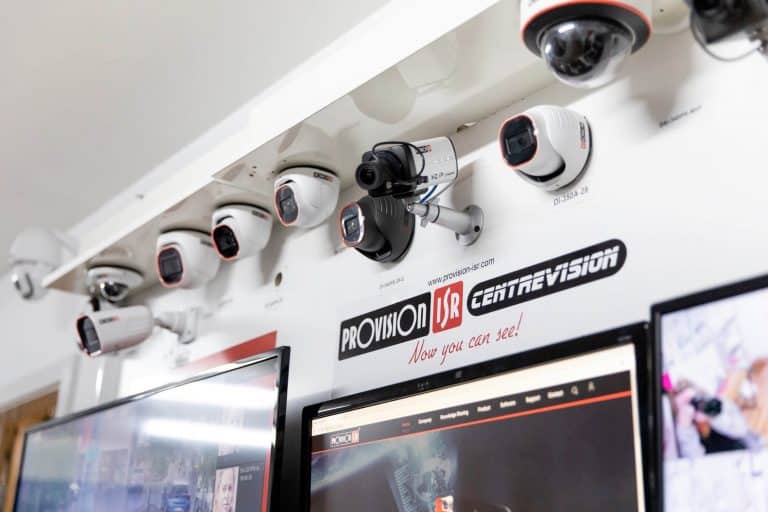


Bpoint technicians working at the entrance of a commercial showroom
Commercial access control · Melbourne

Access Control Systems Melbourne

Bpoint designs access control systems in Melbourne for organisations that need stronger control over permissions, access events, restricted areas and user administration.

For commercial sites, the value of access control lies in how well the system manages changing users, operating hours, risk zones and wider security infrastructure. Platform selection, credential policy, locking hardware, power-loss behaviour and integration all affect long-term performance.

Bpoint works across warehouses, offices, retail operations, multi-tenant properties and other commercial environments where access needs to remain secure, auditable and manageable as the site changes.

More than 20 years of security experience Licensed security technicians Inner Range Inception and Integriti

Get a quote

Speak with a security specialist about your site, current access arrangements and permission requirements.

Bpoint assesses access flows, hardware and risk zones before defining the scope, so the design reflects how the site actually operates.

Replies same business day
20+ Years
Securing Melbourne since 2004
★★★★★ 5.0
60 verified Google reviews
Premium hardware
Vendor-supported platforms only
24/7 Monitoring
Australian-based response

Access control that strengthens governance across the site

A capable access control system gives security and facilities teams a consistent framework for managing who can access each area and under which conditions.

The operational gains become particularly important as staff numbers, contractors, tenants or sites increase.

Commercial access control can support

  • Role-based permissions across departments and locations
  • Immediate credential revocation
  • Time-based and temporary access
  • Restricted plant, storage and high-risk areas
  • Event histories for incident review
  • Contractor accountability
  • Consistent policies across multiple sites
  • Integration with a wider commercial security systems environment

The quality of the outcome depends on how clearly the access rules reflect the organisation’s actual operating model.

Credential options

Credential strategy should follow risk, workforce and administration

The question is rarely which credential technology works. The more important question is which credential model gives the organisation the right balance of security, administration and user accountability.

Cards and fobs

Cards and fobs remain effective where organisations need scalable credential management across employees, tenants or contractors.

Their main advantage lies in individual attribution and rapid revocation. Administrators can remove a lost or compromised credential without affecting other users.

For larger sites, governance matters as much as the credential itself. Naming conventions, permission groups, expiry rules and credential issue procedures all influence the quality of the audit trail.

PIN credentials

PIN access can reduce credential handling in selected applications, but shared codes weaken attribution.

Where accountability matters, individual PINs or multi-factor authentication provide stronger control than common codes used by several people.

Biometric access

Biometric verification can strengthen identity assurance in locations where credential sharing presents a higher risk.

The decision also introduces additional requirements around enrolment, administration, privacy and the operational consequences of failed verification.

The technology should therefore solve a defined security problem rather than act as an unnecessary layer across the whole site.

Mobile and Bluetooth credentials

Mobile credentials can reduce physical credential administration and support faster issue and revocation processes.

They can suit organisations that already manage staff through mobile devices or need a more flexible approach to changing users.

Platform capability, device policies and fallback access still need consideration before deployment.

Inner Range platforms

Inner Range platforms for different levels of access management

Bpoint works with Inner Range platforms across commercial access control requirements.

Discuss an enterprise project

Inner Range Inception

Inception suits many small and mid-scale commercial environments that need centralised access control, event management and security integration without the administration demands of a larger enterprise platform.

Inner Range Integriti

Integriti supports more complex environments with broader requirements across users, access areas, intrusion zones, integrations and administration. This becomes relevant for organisations managing larger sites, several operational zones, more complex permission structures or future expansion.

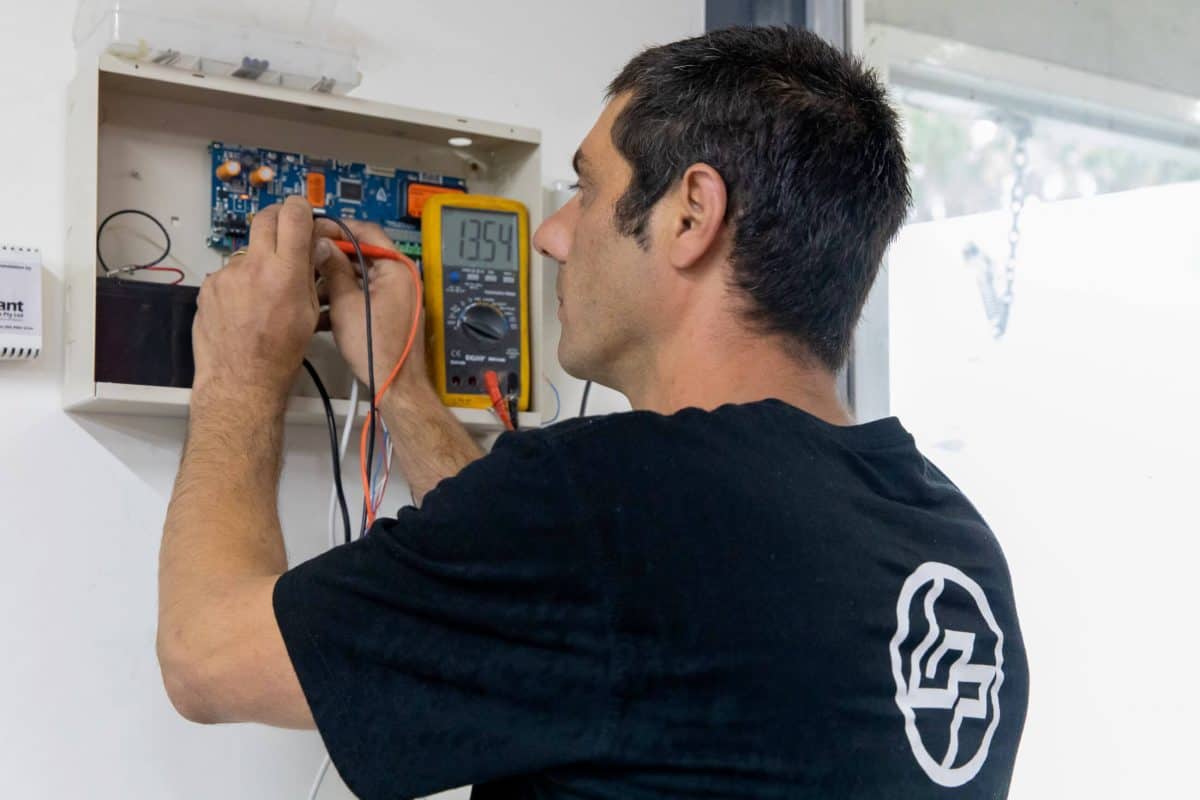
Bpoint technician testing a security panel with a multimeter
System resilience

Resilience during power and communication failure

Mitigate security and operational risk through robust system design.

Power supply capacity, battery backup, controller architecture, lock selection and emergency egress requirements determine how each opening behaves when normal power becomes unavailable.

Fail-secure and fail-safe configurations need to reflect the purpose of the door, life-safety obligations and the operational consequences of losing power.

Bpoint specifies power-loss behaviour at door level rather than applying one response across the site.

The design should also consider controller autonomy and the effect of network interruption. Critical doors should continue to follow their intended security logic when upstream connectivity changes.

Bpoint technician reviewing live camera views on a video management screen
Integrated security

Integration that improves incident context and system control

Access control becomes considerably more useful when event data connects with compatible security platforms.

An access event can correspond with footage from commercial CCTV systems Melbourne organisations use across controlled entrances. This gives management both the credential event and visual context during incident review.

Alarm integration can coordinate selected arming and disarming functions according to authorised user activity.

Commercial intercom systems can connect visitor verification with controlled door release.

Sites requiring an external escalation process can also incorporate 24-hour security monitoring.

Where video infrastructure forms part of the project, professional CCTV installation Melbourne services can address camera placement, recording architecture and commissioning.

Bpoint technician reviewing a camera view on a laptop at a commercial site
Reporting and accountability

Audit trails, zoning and contractor accountability

Access data becomes valuable when the organisation can use it to answer operational questions quickly.

A well-configured platform can help establish

  • Which credential accessed a controlled door
  • Which permissions applied at the time
  • When access occurred
  • Where repeated denied-access events occur
  • Which temporary credentials remain active
  • Which access rules apply across different sites or departments

Contractor management provides a common example.

A contractor can receive access to an approved loading or service area during a defined work window without gaining access to plant, offices or tenancy spaces.

For warehouses, warehouse security systems can combine these access rules with CCTV, alarms and monitoring.

For multi-tenant environments, property management security can apply different access policies across common areas, plant rooms and tenancy spaces.

Facilities requiring high-integrity access control infrastructure

Warehouses and industrial sites

Industrial environments often require clear separation between plant, warehouse, office, loading and contractor areas.

A well-specified system can apply role-based permissions across those zones without forcing management to rely on broad site-wide access.


Multi-site retail and franchise operations

Centralised access management can help retailers apply consistent policies across locations while still allowing site-specific permissions where required.

Credential administration also becomes simpler when staff transfer between approved locations.

Property management and multi-tenant sites

Electronic credentials give property managers faster control over tenant, contractor and service access.

The value becomes especially clear when occupant changes would otherwise require physical key replacement or manual key registers.

Offices

Office security systems can apply access rules across public areas, staff spaces, executive areas and restricted rooms while maintaining a central record of authorised entry.

Brands & platforms

Security technology from established manufacturers

Bpoint works across a broader range of professional security manufacturers when the project requires different device, integration or infrastructure capabilities.

Businesses comparing video platforms can also review our guide to the best CCTV brands for business.

Bpoint technicians planning an installation on a laptop at a commercial site
Design considerations

What determines the right access control design

A stronger specification considers more than reader and credential selection.

Key design decisions include

  • Permission structures across employees, contractors, visitors and administrators
  • Door hardware and egress requirements
  • Power-loss behaviour
  • Scheduled access and temporary permissions
  • Audit and reporting requirements
  • CCTV, alarm, intercom and monitoring integration
  • Administration across multiple sites
  • Future door, tenancy and user growth
  • Platform support and serviceability
Verified client reviews

Rated 5.0 by Bpoint customers

★★★★★ 5.0 · 60 reviews on Google
★★★★★

“Bpoint installed our audiovisual, security and camera systems. The 4K HDR vision has genuinely helped detect issues. I’ve recommended them to friends who’ve all enjoyed the same service and capability.”

MK
Mark Kuperholz
Homeowner · Toorak
Frequently asked questions

FAQs

Can’t find what you’re looking for? Call us on 03 9020 9393, a specialist will answer.

The appropriate credential depends on user volumes, identity assurance, administration requirements and the consequences of credential sharing or loss. Many commercial environments use more than one credential method across different risk areas.
An authorised administrator can revoke the affected credential without changing access for other users. Strong credential administration should also include clear issue, replacement and expiry procedures.
System design should account for battery autonomy, controller operation, lock behaviour and emergency egress requirements. Bpoint specifies these requirements at opening level according to the site’s operational and life-safety needs.
Yes. Compatible platforms can associate access events with camera footage and coordinate selected alarm functions. Integration depends on the platforms and configuration involved.
No. User volumes, zoning, permission complexity, reporting requirements, integrations and future expansion can matter more than floor area or door count.
Yes. Access control can manage common areas, shared facilities, service zones, plant rooms and tenancy-specific areas within the same property.
Inception suits many small and mid-scale commercial applications. Integriti supports more complex environments that require broader user management, zoning, integration and administration.
Bpoint can review the system and advise on the available options. Some Inner Range installations require a formal transfer of installer authorisation before another provider can assume programming or support responsibility.

Have a question we haven’t answered?

Call a Bpoint specialist directly, no hold queues, no chatbots.

Plan around risk and governance

Plan access control around operational risk and governance

Arrange an access control consultation with Bpoint. Our specialists assess access flows, hardware, permissions, security risk, system resilience and integration requirements before defining the recommended scope.