

Commercial Security Cameras Melbourne
Commercial CCTV should give security and management teams usable evidence, reliable coverage and faster context when an event requires review.
Bpoint designs commercial security camera systems in Melbourne around the incidents the organisation needs to detect, verify or investigate. Camera placement, lens selection, recording architecture, analytics, network design and monitoring all contribute to that outcome.
Our commercial CCTV work spans warehouses, industrial properties, retail sites, offices, large commercial premises, multi-level residential properties and education environments across Melbourne.
Get a quote
Speak with a security specialist about your site, the areas that need coverage and the evidence the footage has to support.
Bpoint assesses the premises before defining the scope, so camera placement and recording reflect the incidents you need to review.
Replies same business dayCommercial CCTV performance starts with the questions the footage must answer
Camera quantity is a poor indicator of system quality.
The stronger design question is what management needs to establish when something goes wrong.
That may include
- Who entered an area
- Which vehicle arrived at a loading point
- What happened before an alarm event
- Which direction a person moved through the property
- When stock or equipment changed location
- Which site requires attention across a multi-location operation
Coverage, image quality, programmed analytics and retention are specified around those requirements.
A commercial CCTV security system that produces large volumes of footage without useful incident detail creates additional review work without improving security.
Coverage design should follow operational risk
Warehouses and industrial sites
Industrial sites may require visibility across loading areas, external yards, vehicle routes, high-value storage, production zones and staff access points.
The specification needs to account for long viewing distances, height, variable lighting and the level of detail required at each location, including number plate recognition at vehicle entries, gates and loading points.
Bpoint integrates CCTV within wider warehouse security systems where access control, alarms and monitoring also contribute to site security.
Offices, car parks and commercial properties
These environments require different levels of detail across reception areas, shared spaces, external access points and vehicle areas.
Camera image quality is high across the board, so the adjustment is made to recording resolution. Identification points record at full resolution while lower-priority views record at a reduced resolution, which controls storage across large systems without compromising the views that matter.
On a 100-camera site, that decision avoids a substantial investment in additional hard drive capacity. Camera type is then matched to each position: multi-focal (MVF), fisheye or active deterrent cameras, according to the view required.
Retail and multi-site operations
Retail systems often require a balance between local incident evidence and central visibility across multiple locations.
Management may need consistent camera standards, remote access and retention policies across a network of stores.
Bpoint supports broader retail security requirements, with dedicated retail CCTV systems Melbourne covering customer, transaction and back-of-house areas.
Evidence quality depends on more than resolution
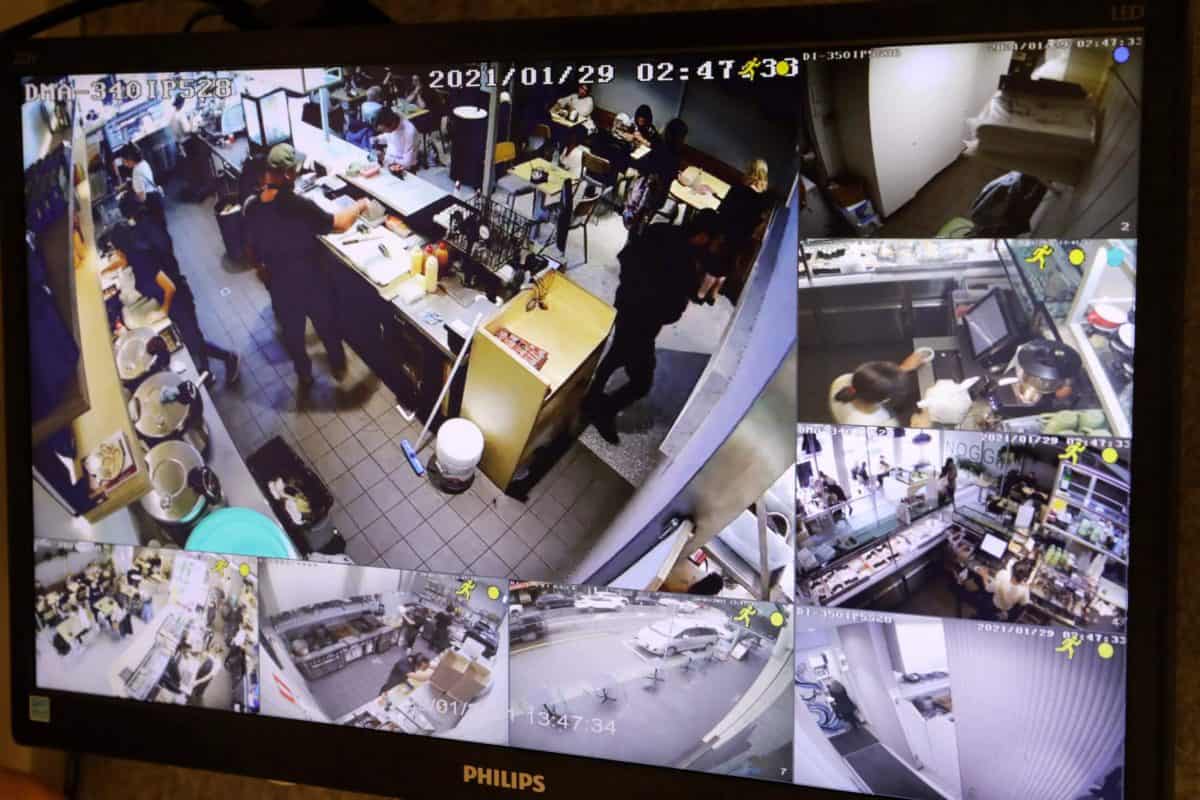
Higher megapixel counts do not guarantee stronger evidence.
Lens selection, scene width, lighting, mounting height, subject distance, frame rate and recording settings all affect the usable result.
A camera intended for broad situational awareness has a different purpose from one that needs to support identification at a controlled entrance.
Bpoint defines the expected outcome for each view before specifying the camera.
This approach helps avoid a common problem in business CCTV systems where a technically high-resolution camera still fails to capture the level of detail required during an incident.

Analytics should reduce review time and improve event detection
Modern commercial security camera systems run analytics that identify defined activity and accelerate footage review.
The key lies in configuring analytics around meaningful events rather than enabling every available detection function.
Applications include perimeter activity, line crossing, object movement, facial recognition and vehicle registration (number plate) recognition, configured according to the camera and platform.
Analytics also drive monitored CCTV, sending each defined event to an operator rather than leaving it unnoticed in recorded footage.
Bpoint’s 24-hour security monitoring includes camera verification and live operator audio response on compatible systems. Virtual guarding extends this: camera analytics trigger on a defined event, the control room verifies it, an automated warning plays through external speakers, a live operator intervenes, and police or other agreed action follows.
Recording architecture should match operational and evidentiary requirements
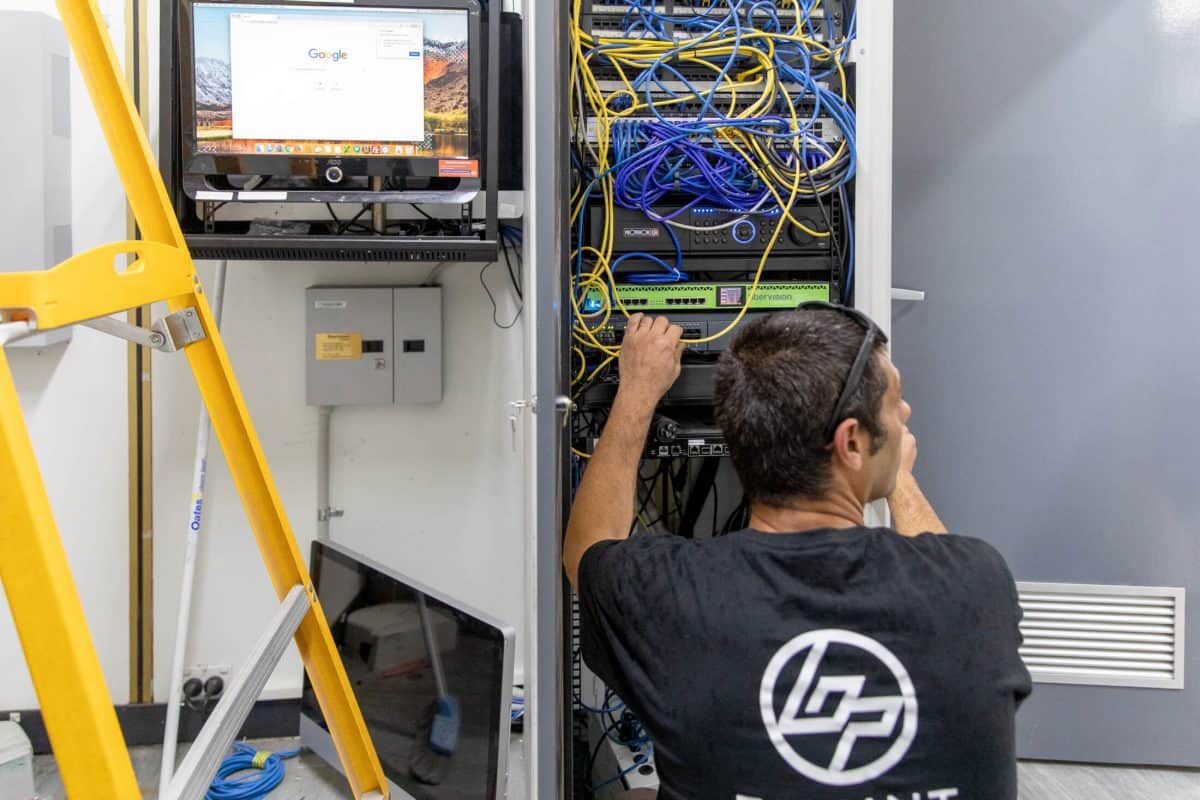
Storage planning needs to account for more than a nominal number of recording days.
Camera count, resolution, frame rate, compression, recording mode and scene activity all affect retention.
Larger systems also require video management software that supports
- Multiple sites
- Different user permission levels
- Efficient search and export
- System health visibility
- Consistent administration
- Future camera expansion
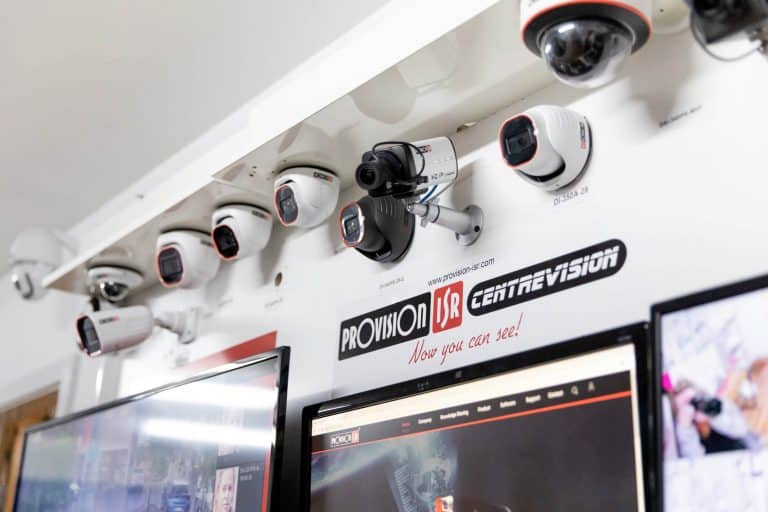
Bpoint works with established commercial video platforms including Hanwha, Hikvision and Provision. For sites that require more advanced video management, Bpoint deploys VMS platforms including NX Witness and Wisenet for centralised camera management, multi-site visibility, controlled user permissions and faster incident review.
Platform selection should reflect how the organisation needs to manage video across the site over time. Camera volumes, user access, retention requirements, analytics, integrations and future expansion all influence the appropriate architecture.
Our guide to the best CCTV brands for business compares the main manufacturers. Professional CCTV installation Melbourne services cover the infrastructure, mounting, network configuration and commissioning required to support the selected camera and video management platforms.

Wired infrastructure remains the commercial standard
Bpoint specifies wired network infrastructure with PoE for the vast majority of commercial CCTV installations. Each camera draws power and data from a central switch, which keeps connectivity reliable and allows power backup to be centralised.
Wireless CCTV is rarely recommended for commercial sites. A wireless camera depends on a local power supply at its position, so a loss of that power is a loss of CCTV view. Wireless is specified only where cabling is genuinely impractical, such as heritage restrictions or protected finishes.
Where wireless equipment is required, Bpoint assesses network coverage, interference, power availability and system reliability before including it in the specification.

Privacy and placement require deliberate design
Commercial surveillance cameras should focus on the areas the organisation has a legitimate reason to monitor.
Camera positioning should avoid unnecessary capture of neighbouring private areas and consider how surveillance affects staff, customers and visitors.
Workplace surveillance and privacy obligations depend on the circumstances of each site, and facial recognition carries additional privacy obligations. Organisations should obtain appropriate legal advice where a proposed use creates a specific compliance question.
Bpoint approaches placement by defining the required security view first, then specifying the camera and position around that requirement.
Integrating CCTV with access, alarms and intercoms improves incident context
Video becomes significantly more useful when it corresponds with other security events.
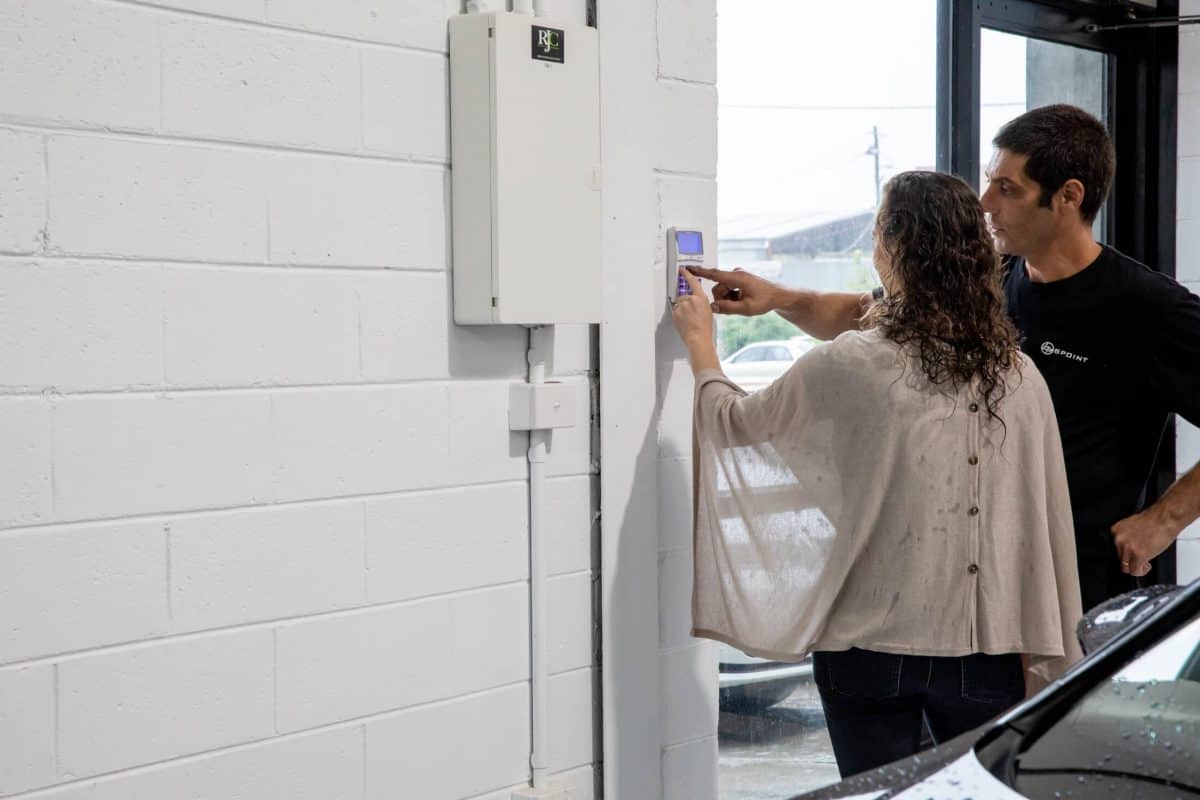
Bpoint integrates CCTV with its access control systems across Melbourne, matching credential events at controlled doors with footage from the same area.
Alarm events also direct authorised users or monitoring operators to the cameras covering the affected zone.
Commercial intercom systems link visitor communication and door release with the VMS or NVR that manages the cameras at that entry.
A broader commercial security systems design coordinates these technologies where integration improves response or administration.
Security technology from established manufacturers
Bpoint works across a broader range of professional security manufacturers when the project requires different device, integration or infrastructure capabilities.
Businesses comparing video platforms can also review our guide to the best CCTV brands for business.












System health matters before footage is needed
A commercial camera system often appears operational while recording quality has already deteriorated.
Common issues include
- Camera angles or fields of view that have shifted from the intended coverage
- Dirty lenses
- Storage faults
- Offline devices
- Network changes
- Failed recording
- Incorrect time settings
- Reduced low-light performance
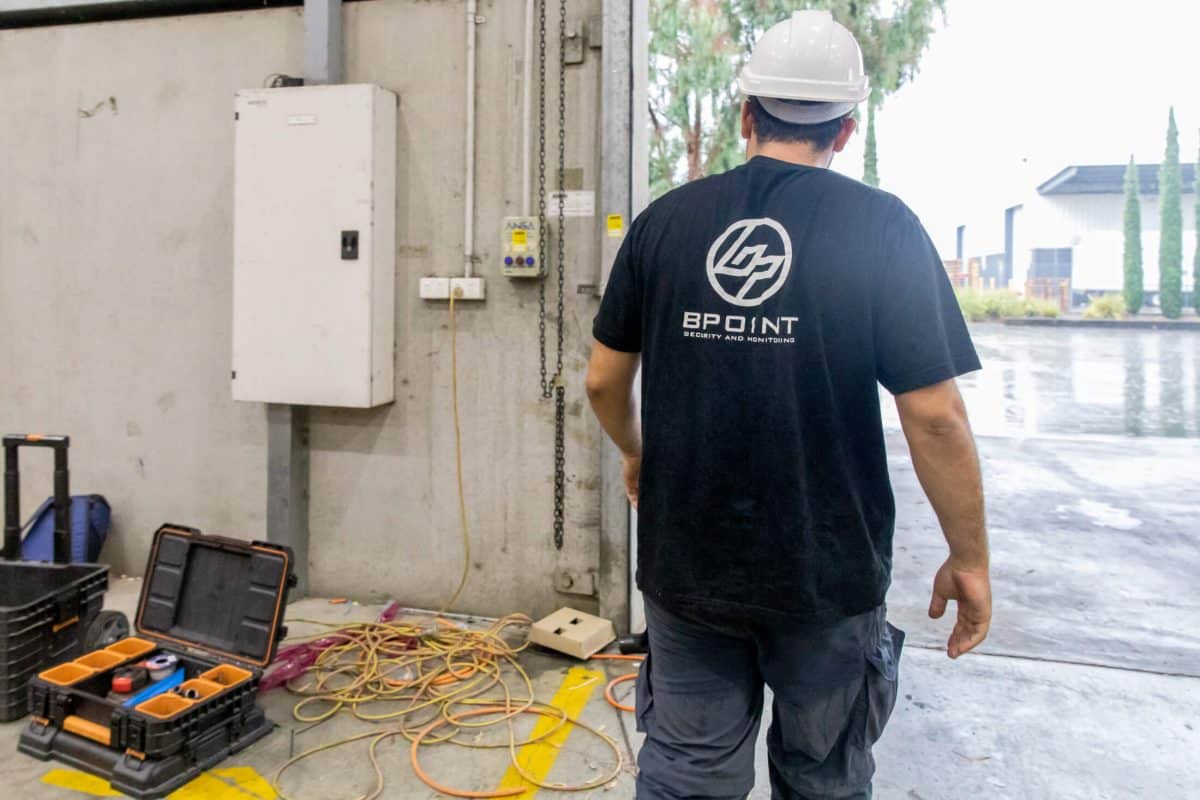
Scheduled maintenance and system health checks help identify these issues before an incident requires footage.
Bpoint inspects existing security camera systems, identifies performance gaps and recommends practical upgrades where equipment no longer meets the site’s requirements.
Rated 5.0 by Bpoint customers
Guides, insights and industry news
Stay informed about security technology, system management and the decisions that affect long-term performance.
 cctv
cctv
Best CCTV Camera Brands for Businesses in Australia
The best CCTV brands for Australian businesses in 2026 are Provision ISR (best budget pick), Hikvision (best value with AI features), Dahua (best for…
 cctv
cctv
How Provision ISR and CheckPoint Software Protect CCTV Systems from Cyber Threats
Modern CCTV systems face sophisticated cyber threats that extend beyond physical security concerns. As surveillance infrastructure becomes increasingly networked and IoT-enabled, vulnerabilities to digital…
 Commercial Security
Alarm Zoning: Maximising Security System Efficiency Through Strategic Configuration
Security system design requires careful assessment of risk distribution across commercial properties. Effective protection strategies recognise that different areas within a facility present varying…
FAQs
Can’t find what you’re looking for? Call us on 03 9020 9393, a specialist will answer.
Have a question we haven’t answered?
Call a Bpoint specialist directly, no hold queues, no chatbots.
Plan commercial CCTV around evidence, visibility and response
Bpoint assesses the premises, defines the required coverage and specifies a commercial CCTV configuration that supports the organisation’s operational and security requirements.